

Effective Airbnb pricing requires a dynamic, data-driven approach that adjusts to market demand, seasonality, and local events to maximise revenue. Setting the right price is one of the most critical decisions a short-term rental owner can make, and it is rarely a set-and-forget task.
Why Fixed Pricing Kills Your Airbnb Revenue
It is nearly impossible to manage pricing manually unless you have access to real-time local data and only manage one or two properties. If you are not reviewing your calendar daily, or even hourly, you will miss major events in the area of your short-term rental and leave significant income on the table.
Fixed rates fail to account for the constant fluctuations in market demand. Weekends, public holidays, local festivals, and school holiday periods all drive significant pricing opportunities that a static rate will never capture. Moving to a dynamic pricing approach is no longer optional for hosts who want to remain competitive.
How to Calculate Your Airbnb Base Rate

Before implementing any dynamic pricing strategy, you need to establish a solid base rate — the minimum nightly rate at which your property is profitable.
Your base rate should account for all operating costs, including:
- Mortgage or rent
- Utilities
- Cleaning fees
- Platform and channel commission fees
- Maintenance and restocking costs
Most Property Management Systems (PMS) allow you to mark up your base rate to cover channel fees automatically, ensuring you never price below your break-even point regardless of which platform a guest books through.
Dynamic Pricing Tools: PriceLabs, Beyond & Wheelhouse
Once you have your base rate established, dynamic pricing tools allow you to automate daily rate adjustments based on real market data. Leading tools in the short-term rental industry include:
- PriceLabs — Highly customisable with strong local data sets and rule-based automation.
- Beyond — Intuitive interface with strong market analytics and forward-looking demand data.
- Wheelhouse — Flexible pricing strategies with a focus on revenue optimisation.
- Airbnb Smart Pricing — Airbnb’s native tool; easy to use but offers less control compared to third-party platforms.
While these tools are powerful, manual oversight remains important, particularly for premium or unique listings that an algorithm may undervalue. A tool is only as good as the data behind it, so always ensure the tool you choose has a local data set relevant to your short-term rental market.
⚠️ Important: Do not open your calendar too far in advance without a dynamic pricing system in place. Guests actively search for under-priced properties during peak periods, and independent operators without dynamic pricing are particularly vulnerable to this.
Seasonal & Event-Based Pricing Adjustments

Seasonality is one of the biggest drivers of short-term rental revenue. Increasing rates during peak demand and lowering them during off-peak periods helps maintain consistent occupancy across the year.
To do this effectively, you need a comprehensive view of all relevant dates, including:
- School holidays (local and interstate)
- Public holidays
- Major local events (concerts, sporting events, festivals, conferences)
- Interstate travel patterns — events in other states often drive inbound travel to your area
Missing even one major sold-out event in your area can represent a significant lost revenue opportunity. Dynamic pricing tools that integrate local event data are invaluable for capturing these spikes automatically.
Length of Stay (LOS) & Minimum Night Strategies
Implementing length-of-stay rules is a smart way to reduce cleaning turnaround, minimise vacancy, and protect your property from unprofitable bookings.
Weekly and monthly discounts encourage longer stays, which typically boost overall revenue while reducing the operational overhead of frequent changeovers.
Minimum night rules are equally important. Many properties apply a minimum of two nights during the week and a higher minimum, such as two to three nights, over weekends. This strategy protects the property from being “cherry-picked” for a single night on a Friday or Saturday, which would otherwise block the ability to attract a full weekend booking.
Minimum night settings can and should be adjusted dynamically to fill gaps between existing bookings, particularly during high-demand periods.
Far-Out vs. Last-Minute Pricing: A Complete Strategy

A strong pricing strategy accounts for both ends of the booking window:
- Far-out bookings (90+ days in advance): Set prices 20–30% higher than your target rate. Early planners are less price-sensitive, and you can always reduce rates closer to the date if demand does not materialise.
- Last-minute bookings (within 7–14 days): Lower rates for unbooked dates to fill gaps and avoid vacancy. An occupied property at a reduced rate almost always outperforms an empty one.
This same principle applies to major events you know are coming, such as sold-out concerts or large sporting events. Raise rates early, and only discount if dates remain unbooked as the event approaches.
💡 Pricing Tip: Be strategic about how far in advance you open your calendar. Opening too early without dynamic pricing in place exposes you to guests searching for under-priced peak-period dates, a pattern that is especially common when independent operators are not using an automated pricing system.
Key Pricing Rules Every Host Should Know

Beyond the core strategies, keep the following principles in mind when managing your Airbnb pricing:
- Total Price Visibility: Always consider the total price a guest pays, including cleaning fees and platform service fees. A low nightly rate with high cleaning fees can deter bookings just as much as an inflated nightly rate.
- Competitor Analysis: Regularly research similar nearby listings. Compare their weekday versus weekend pricing, their occupancy rates, and their minimum stay rules to identify your pricing “sweet spot.”
- Value-Based Pricing: If your property offers unique amenities — such as a hot tub, exceptional views, or proximity to key attractions — make sure your pricing reflects that value. Do not let an algorithm undercut a premium product.
- Adjust Minimum Stays to Fill Gaps: Revisit your minimum night rules regularly to avoid leaving single-night gaps between bookings during high-demand periods.
How Professional Property Management Optimises Airbnb Pricing
Managing dynamic pricing effectively is a full-time responsibility. It requires daily monitoring of market data, local events, competitor activity, and calendar gaps — tasks that quickly become overwhelming for owners managing multiple properties or those without access to real-time local insights.
For property owners who want to maximise revenue without the daily demands of active price management, partnering with a professional short-term rental management company means having experienced operators monitor pricing, track local events, and optimise your calendar around the clock.
At Sepal Stays, our team combines industry-leading dynamic pricing tools with deep local market knowledge to ensure every property in our portfolio is priced to perform, from quiet midweek nights to peak-season weekends.
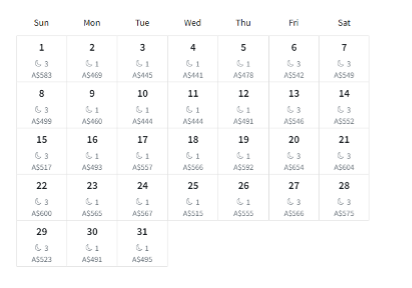
The image below shows a real-time pricing calendar managed with dynamic pricing tools. Notice how weekend rates, minimum night rules, and weekday pricing are all independently optimised, preventing single-night cherry-picking while maximising revenue across the full booking window.
Ready to stop leaving money on the table?
Contact Sepal Stays today to find out how our dynamic pricing management can increase your short-term rental income, without the daily grind.